The school lunch menu is an important part of every student’s day. It gives children the energy they need to learn, play, and stay focused in the classroom. A well-planned menu can support healthy growth and help students build better eating habits. Today, schools use creative menus to make food enjoyable, nutritious, and balanced.
This article explains how school lunches are planned, what foods are usually offered, how nutrition guidelines work, and how parents can use the menu to encourage healthy eating. You will also learn how menus change during the year and how schools adjust meals for dietary needs.
Why the School Lunch Menu Matters
The meals served at school provide many children with their main source of daily nutrition. For busy families, it is reassuring to know that their child can receive a balanced meal each day. A good school menu includes foods that support brain function, muscle development, and concentration.
Schools aim to provide meals that follow national nutrition standards. These standards focus on offering a mix of food groups such as whole grains, lean proteins, fruits, vegetables, and dairy. When the school lunch menu is carefully planned, it supports both academic performance and overall well-being.
ALSO READ: Chocolate Milkshake
How Schools Plan the Menu
Planning meals for hundreds or even thousands of students is not simple. Nutrition experts work with school administrators to design meals that meet health guidelines and fit within a budget. They also try to make meals fun so that students actually enjoy eating them.
Each week, planners organize the menu to include different food groups. They avoid repeating the same meals too often and try to include seasonal ingredients. The school lunch menu also reflects cultural diversity, allowing students to try new foods from different backgrounds.
ALSO READ: 2 Nibblerz®
Common Foods Found in a School Lunch Menu
Most school cafeterias aim to provide a variety of foods throughout the week. These meals often include a combination of:
1. Whole grains
Items like whole-grain bread, pasta, and rice help students stay full and energized.
2. Lean proteins
Chicken, turkey, beans, tofu, and fish are common protein choices that support muscle growth.
3. Fruits and vegetables
Fresh apples, oranges, carrots, salads, and steamed vegetables appear often on the menu. These items help students get essential vitamins and minerals.
4. Dairy options
Milk, yogurt, and cheese are served to provide calcium for strong bones.
5. Healthy beverages
Many schools avoid sugary drinks and serve water or low-fat milk instead.
A successful school lunch menu balances taste and nutrition so children look forward to eating their meals instead of skipping them.
Daily and Weekly Menu Structure
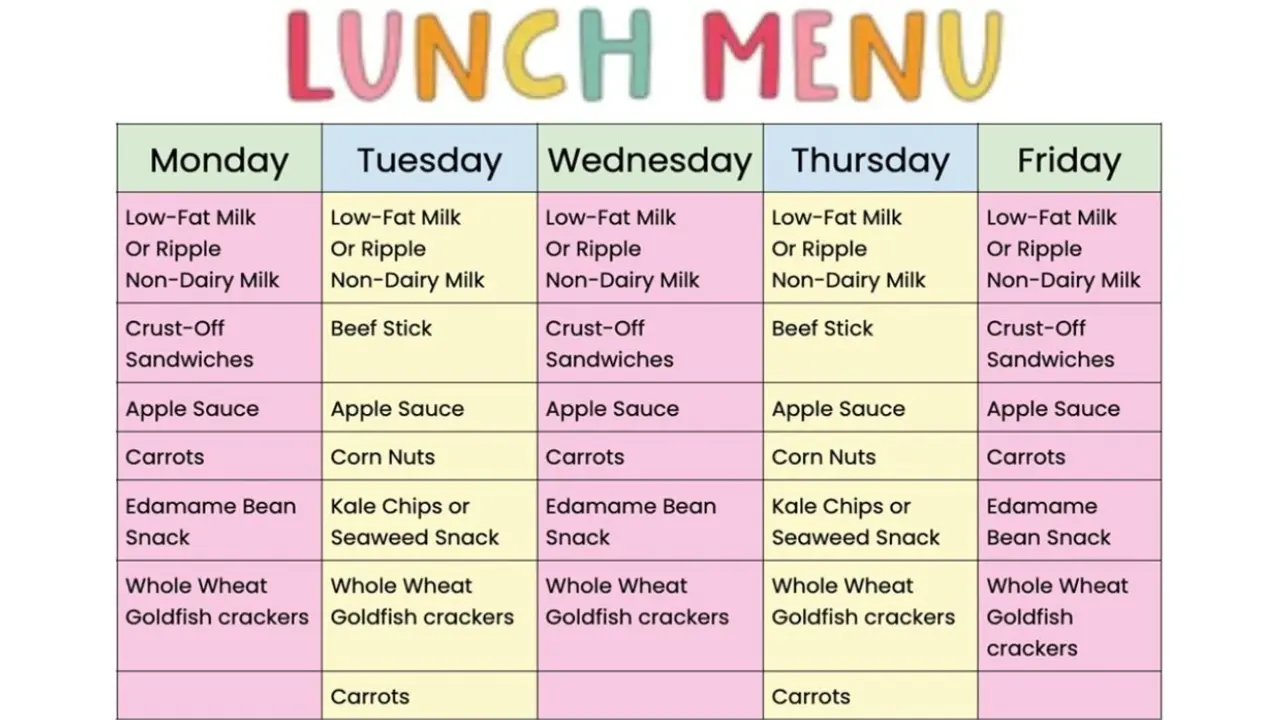
Most schools create a weekly schedule that repeats each month. This helps families plan ahead. A typical weekly structure might look like this:
- Monday: Pasta or whole-grain noodles with vegetables
- Tuesday: Tacos, burrito bowls, or wraps
- Wednesday: Sandwich day with fruit and salad
- Thursday: Stir-fry or chicken with rice
- Friday: Pizza day with a vegetable side
In addition, many schools include optional salad bars, fruit cups, or yogurt stations. The goal is to give students choices while keeping meals healthy.
Nutritional Guidelines Schools Must Follow
Schools follow strict nutrition regulations. These rules help promote healthier eating habits and limit high-calorie, high-sugar foods. Important guidelines include:
- Offering fruit and vegetables daily
- Including whole grains in most meals
- Limiting sodium and unhealthy fats
- Providing protein-rich foods
- Serving age-appropriate calorie portions
These requirements help ensure that every school lunch menu offers meals that support long-term health.
Special Dietary Options and Food Allergies
Many students have food allergies or dietary needs. Schools work hard to make sure every child can enjoy a safe meal. For example, cafeterias often provide meals that are:
- Gluten-free
- Dairy-free
- Nut-free
- Halal or kosher
- Vegetarian or vegan
Parents can contact the school nutrition office to arrange alternatives. Most schools label meals clearly to help students avoid allergens.
Seasonal Changes in the Menu
Menus often change throughout the year. During colder months, schools may serve warm meals like soups and casseroles. In spring or summer, lighter meals such as salads or fresh fruit bowls become more common.
Seasonal foods allow schools to take advantage of fresh produce, which is tastier and more affordable. This adds variety and helps students eat a wider range of nutritious options.
Cultural Diversity in the Menu
Schools today are more diverse than ever. To celebrate this diversity, many cafeterias include meals inspired by different cultures. Students may find dishes like:
- Teriyaki chicken
- Tacos or burritos
- Mediterranean bowls
- Indian lentil dishes
- Pasta with Italian-inspired sauces
Including these meals helps students learn about and appreciate different cultures while exploring new flavors.
How Schools Encourage Healthy Eating Habits
Schools use creative strategies to help students make healthier choices. These strategies include:
- Offering colorful fruits and vegetables
- Displaying healthy items at eye level
- Creating fun names for foods (like “power carrots”)
- Allowing students to taste-test new menu items
- Providing nutrition lessons in the classroom
The goal is to make healthy foods more appealing. When children enjoy nutritious foods early in life, they are more likely to continue healthy habits as adults.
How Parents Can Use the School Lunch Menu at Home
Parents can play a big role in helping kids make good food choices. Reviewing the school lunch menu each week allows families to plan home meals that balance what students eat at school.
For example, if school is serving pasta on Monday, parents may choose a protein-rich dinner at home. If Friday is pizza day, parents might prepare a fresh salad or lighter meal that evening.
Discussing the menu with children also helps them feel involved and encourages them to try new foods.
Benefits of a Well-Designed Menu
A thoughtful school menu offers many benefits:
1. Better academic performance
Nutrition affects attention, memory, and learning.
2. Healthier body weight
Balanced meals help prevent childhood obesity.
3. Stronger immunity
Fruits and vegetables help students fight off illness.
4. Improved eating habits
Children who eat healthy meals at school are more likely to choose healthy foods elsewhere.
5. Reduced stress for families
Parents know their children are receiving nutritious meals daily.
Challenges Schools Face When Planning the Menu
Even with guidelines and good intentions, schools face challenges such as:
Budget limits
Fresh produce and quality ingredients can be expensive.
Food waste
Some students may skip meals or avoid certain foods.
Storage limitations
Smaller schools may not have enough space to store fresh foods.
Variety vs. cost
Offering diverse meals can raise expenses.
Despite these challenges, many schools succeed through creative planning and partnerships with local farms.
Trends in Modern School Lunches
Schools are constantly improving their menus. Popular trends include:
- More plant-based meals
- Locally sourced ingredients
- Reduced sugar and sodium
- Farm-to-table programs
- Cooking meals from scratch
- Introducing global flavors
These trends help make the school lunch menu healthier and more exciting for students.
Technology and Online Menus
Many schools now post their daily and monthly menus online. Some even use mobile apps that notify parents about allergens, ingredients, and calorie counts. Digital menus make it easier for families to plan ahead.
Students can also give feedback through online surveys. This allows schools to adjust meals based on what children enjoy.
How Schools Gather Feedback From Students
Schools value student opinions. They may hold taste-testing events or surveys to determine which meals students prefer. When students feel heard, they are more likely to eat and enjoy their school lunches.
Feedback also helps schools improve the menu and reduce wasted food.
The Future of School Lunch Programs
The future looks promising as more schools adopt healthier and more creative meal programs. Focus areas include:
- Expanding plant-based options
- Using more organic foods
- Offering more customizable meals
- Teaching students about nutrition
- Strengthening partnerships with local farms
The goal is to provide meals that are nutritious, delicious, and environmentally friendly.
Conclusion
The school lunch menu plays a vital role in shaping children’s health, academic performance, and eating habits. When schools provide balanced, tasty, and diverse meals, students benefit in every part of their day. Parents can support this by reviewing menus and encouraging children to make healthy choices.
As schools continue to innovate, the future of school lunches looks brighter than ever. A well-designed menu not only fills stomachs but also builds lifelong habits that support a healthier generation.